FAMILY SELECTOR / 01
Residential
Match the module to usable roof area, mounting requirements and the electrical design.
- Usable roof area
- Mounting interfaces
- Electrical design

01 / THE PRODUCT COLLECTION
Select a family. Then define the exact model for your project.
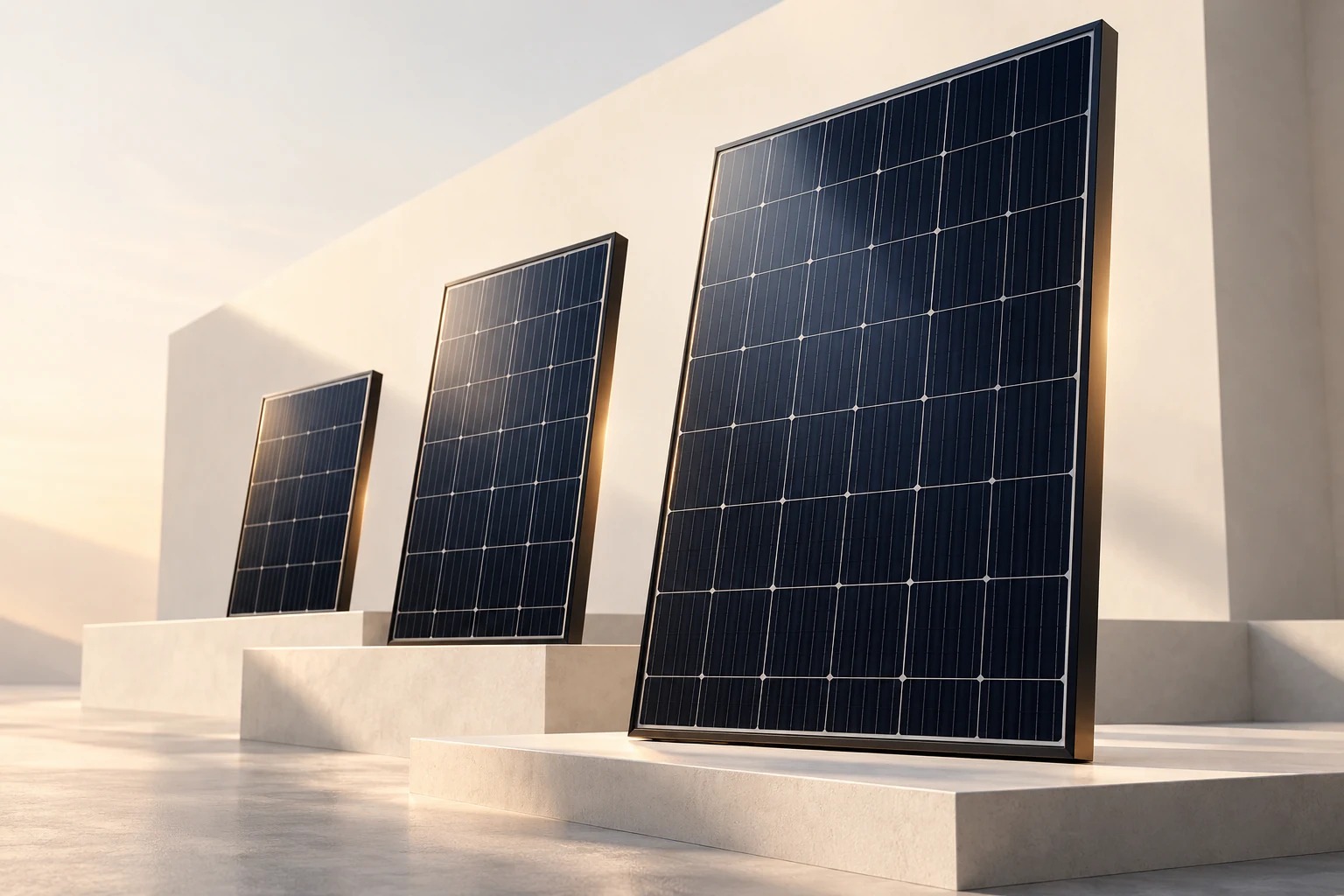
Concept product study. Relative sizes and appearances do not define released models.
02 / OPERATING ENVIRONMENTS
One project brief. Different questions for every environment.
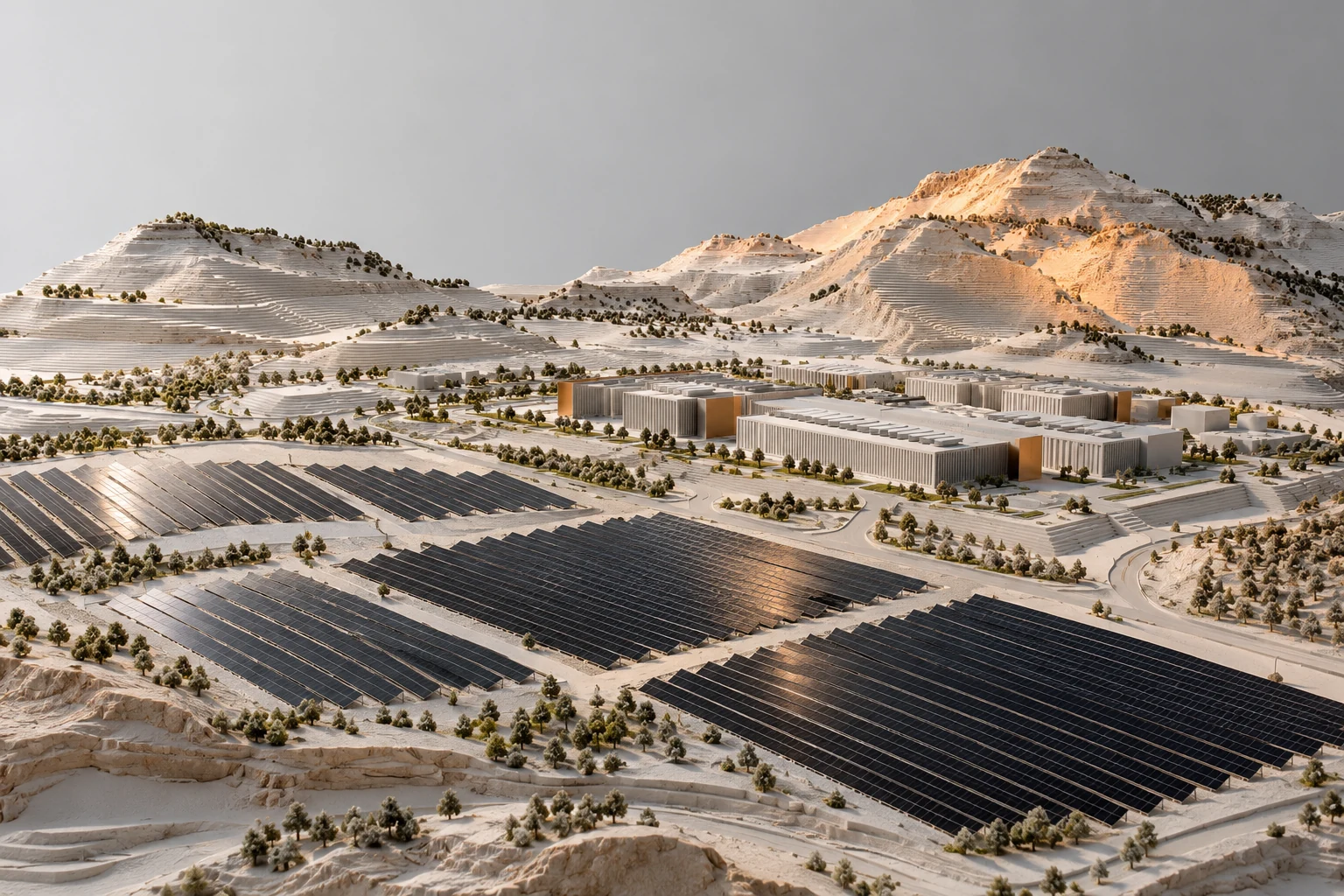
PROJECT LENS / 01
Bring the project capacity, array design, destination and delivery sequence.
PROJECT LENS / 02
Bring the facility load profile, usable area, mounting approach and project schedule.
PROJECT LENS / 03
Bring the campus power plan, growth phases and onsite or offsite generation opportunity.
PROJECT LENS / 04
Bring the critical loads, grid conditions, islanding needs and commissioning window.
Concept architectural maquette. Not a completed Energy America project or a turnkey system offer.
03 / BENEATH THE SURFACE
Understand the form, the interfaces and the evidence behind the selection.
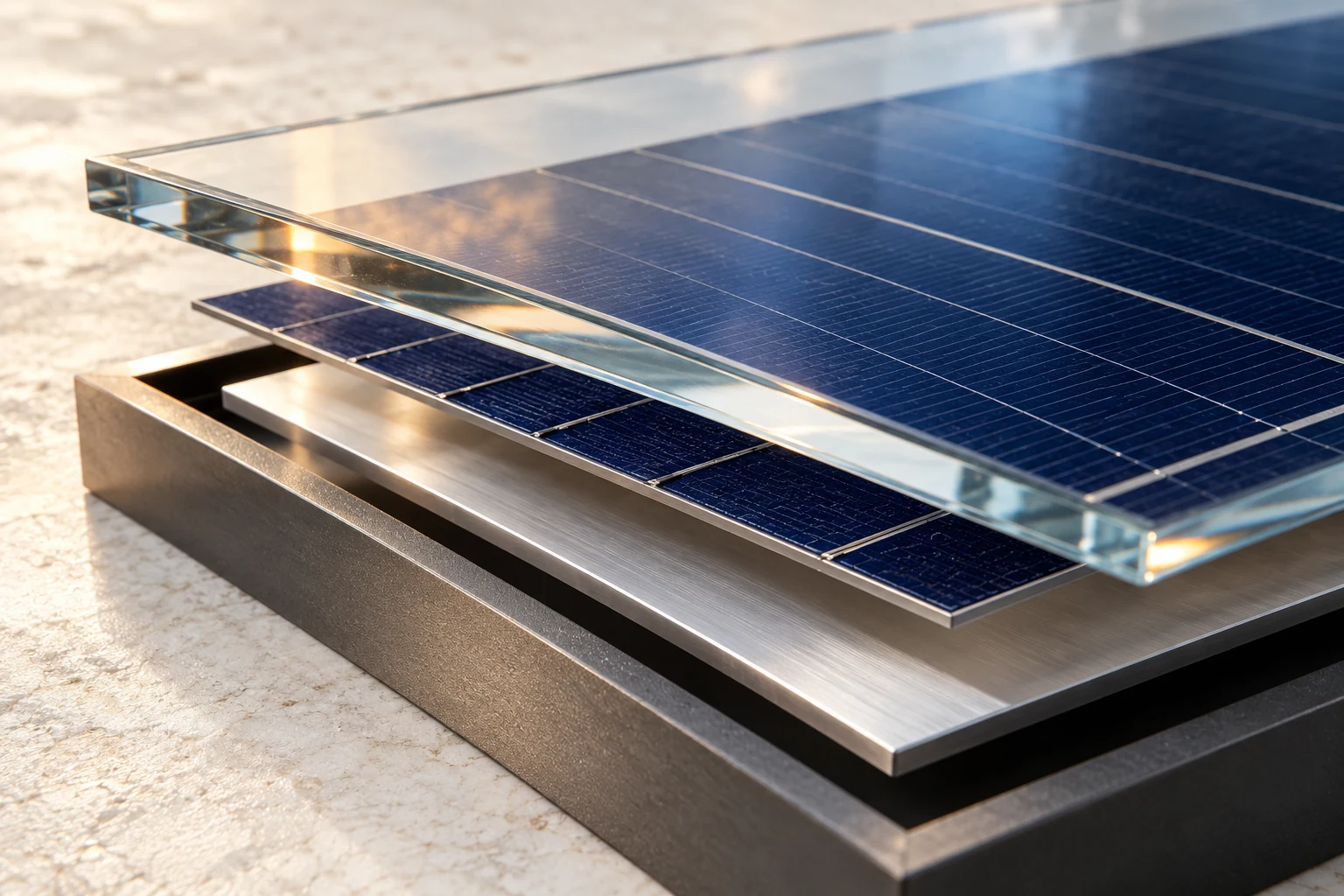
ARCHITECTURE EXPLORER / 01
Review optical protection, glass construction and the operating environment against the exact product record.
ARCHITECTURE EXPLORER / 02
Connect cell layout and interconnection to the selected electrical configuration.
ARCHITECTURE EXPLORER / 03
Check frame, mounting, connectors and handling against the installation design.
Illustrative material architecture. This is not a released Selenium layer stack or bill of materials.
04 / FROM SPECIFICATION TO SHIPMENT
Connect the article, the route and the evidence for your order.
FOLLOW THE ORDER RECORD

ORDER REVIEW / 01
Confirm the model, bill of materials, interfaces, packaging and applicable specification.
ORDER REVIEW / 02
Identify the manufacturing location, allocation and traceability requirements for the order.
ORDER REVIEW / 03
Request applicable inspection, electrical, certification and origin records.
ORDER REVIEW / 04
Agree product identification, shipping documents and acceptance requirements before dispatch.
Concept inspection still life. The actual order follows its approved manufacturing and quality plan.
05 / PEOPLE, PURPOSE & RESPONSIBILITY
A clear relationship between technology stewardship and customer supply.
GROUP STRUCTURE
Research direction · Selenium commercialization
Solar modules · Manufacturing · OEM · Distribution
Your project agreement identifies the supplying entity, product and responsibilities.
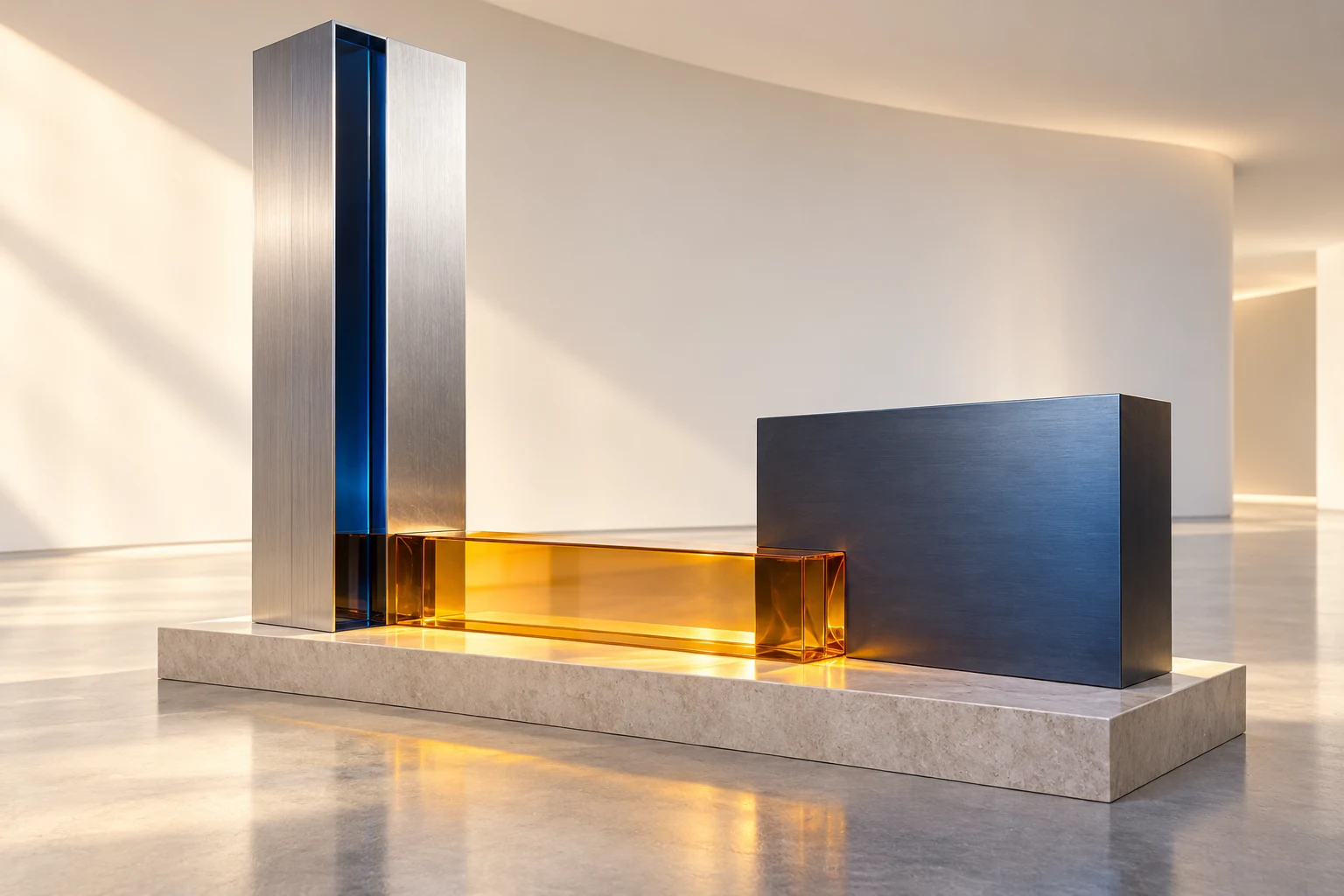
THE GROUP RELATIONSHIP / 01
Centauri Renewable Corporation provides the group’s technology and strategic governance, including research direction and Selenium commercialization.
THE GROUP RELATIONSHIP / 02
Energy America is the customer-facing solar module brand and manufacturing, OEM and distribution operation.
Abstract two-entity relationship sculpture. It does not depict a factory, office or corporate property.
06 / CLARITY FOR THE NEXT STEP
Build a useful document request around model, revision and destination.

SELECT A RECORD TYPE
REQUEST STATE / Request current model documents
Ask for the current electrical ratings, dimensions, mass, connectors and installation interfaces for the selected model.
REQUEST STATE / Request scope review
Review the applicable model, manufacturing site, destination and supporting records.
REQUEST STATE / Confirm order-specific terms
Find the warranty schedule and support route relevant to the purchased model and agreement.
Current model-specific files are not available as downloads in this preview.
Document-request still life. Current model-specific files require a request; no download is implied.
PRODUCT FAMILY / Terrestrial review · mission-specific review
Energy America presents Selenium as a Centauri-governed photovoltaic platform. Company-confirmed manufacturing readiness is a starting point for configuration-specific technical review.
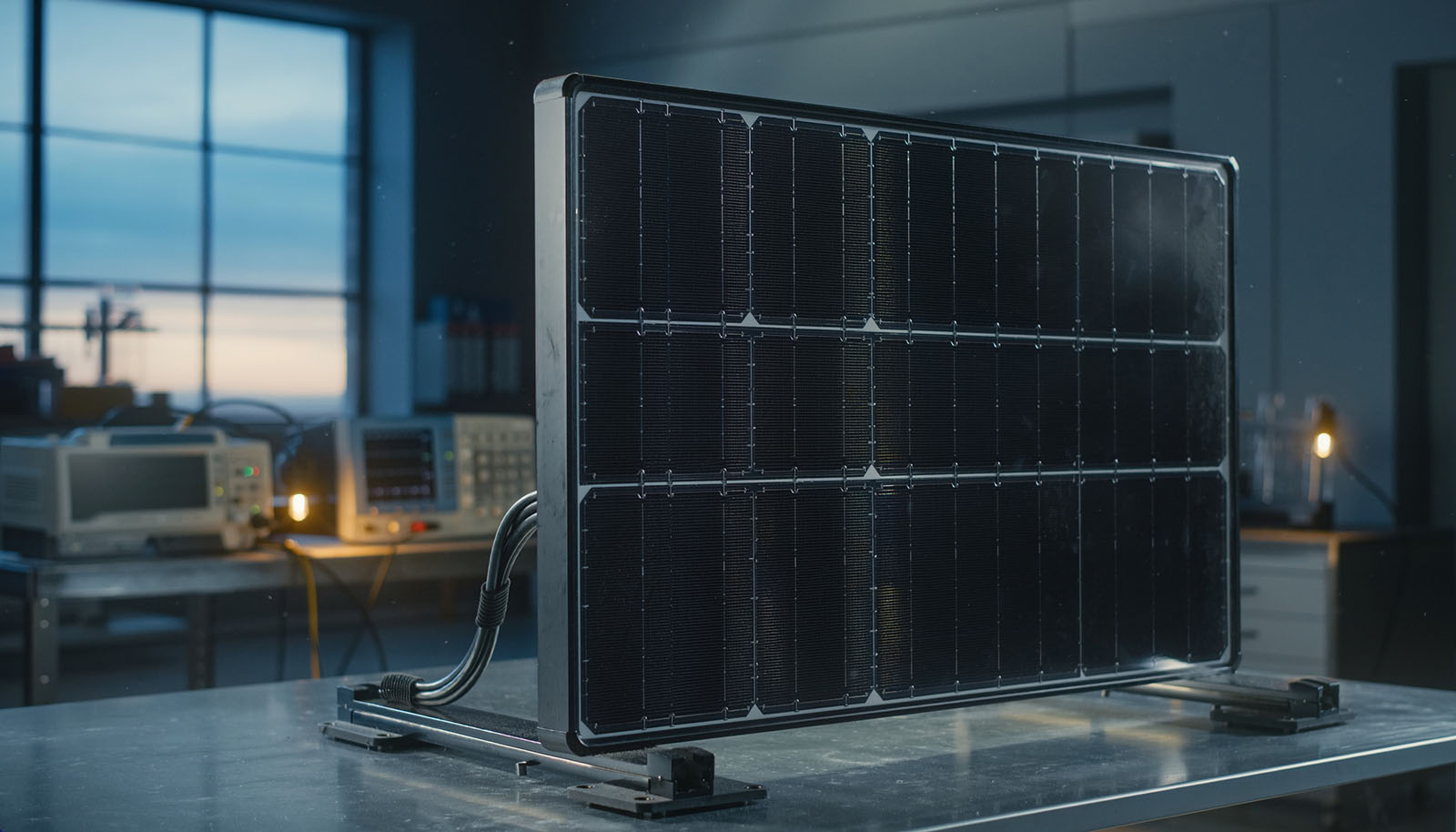
01 / INSPECT THE INTERFACES
Selenium configuration review
SE-R / SE-C / SE-U reference formats
Review the selected external format, mass and mechanical interfaces against the current controlled configuration.
02 / COMPANY-PUBLISHED SOURCE RECORD
| Record | Published value | Inherited source citation and scope |
|---|---|---|
| Rated maximum power | 470 W | Controlled source: SEL-470-M11Q-1 2.pdf; exact SEL-470 / M11Q-1 configuration only. |
| Voltage at Pmax | 40.5 V | Controlled source: SEL-470-M11Q-1 2.pdf; exact configuration only. |
| Current at Pmax | 11.60 A | Controlled source: SEL-470-M11Q-1 2.pdf; exact configuration only. |
| Open-circuit voltage | 49.5 V | Controlled source: SEL-470-M11Q-1 2.pdf; exact configuration only. |
| Short-circuit current | 12.30 A | Controlled source: SEL-470-M11Q-1 2.pdf; exact configuration only. |
| Power tolerance | 0 to +5 W | Controlled source: SEL-470-M11Q-1 2.pdf; exact configuration only. |
03 / ENGINEERING CONTEXT
The original six engineering chapters are retained with their source context. Treat source-dependent claims as company-published until the applicable current record is reviewed.
01 / Origin
Identify the candidate material, substrate, contacts and intended device role through controlled R&D. Rev P03 leaves the exact stack and composition pending definition.
CEN-SE-DS-001 · Rev P03 · 06 October 2026
02 / R&D
Centauri Renewable Corporation controls R&D. Trace material studies, methods, measurements and candidate-device decisions before any transfer into manufacturing.
Material study → measured findings → design review
03 / Architecture
Selenium retains the corresponding standard Energy America external module envelope. The released reference formats are 1812 × 1046 × 40 mm for residential (SE-R) and 2465 × 1134 × 30 mm for utility (SE-U). Commercial and mission-specific selections follow the applicable standard EA format but require the exact controlled mechanical drawing. Internal construction, mass, interfaces, electrical performance and qualification remain configuration-specific.
Standard EA external sizing · illustrative visualization · model-specific construction
04 / Manufacture
All Selenium models are manufacturing-ready, as confirmed by the company on 08 October 2026. Bring the exact model, configuration and destination into production and supply planning.
Manufacturing-ready · company-confirmed 08 October 2026
05 / Inspect
Use identified articles, accepted test methods and configuration-specific findings. Terrestrial validation, manufacturing release and mission qualification have separate requirements.
Engineering target ≠ validated product rating
06 / Application
Manufacturing-ready Selenium products serve terrestrial energy applications and separate space application pathways. The photovoltaic conversion principle is shared, while each operating environment requires its own module architecture and validation.
SPACE: Outside the atmosphere, reference solar irradiance is approximately 1,361 W/m² (AM0). III-V multijunction cells, often incorporating GaAs-based junctions, are widely used. Design priorities include specific power (W/kg), deployment, thermal control, radiation exposure and end-of-life performance. Eclipse periods depend on the orbit; geostationary orbit has eclipse seasons. Coverglass and other protection are selected for the mission's radiation environment.
EARTH: Terrestrial module performance is commonly reported at STC: 1,000 W/m² irradiance, AM1.5 spectrum and 25 °C cell temperature. Crystalline silicon is the dominant commercial technology; tandem architectures are an additional technology pathway. Design priorities include energy yield, lifetime, installed cost and LCOE, alongside wind, snow, hail, moisture and site temperatures.
COMPARE LIKE WITH LIKE: Cell efficiency and complete-module efficiency differ. AM0 and AM1.5 results are not interchangeable. Thermal cycling and qualification limits depend on the exact model, site or mission. Manufacturing readiness is distinct from mission-specific qualification.
NEXT STEP
Share the application, design constraints and expected purchasing timeline. No order is created by preparing an inquiry.